Society Through a Terministic Screen
"When I speak of 'terministic screens,' I have particularly in mind some photographs I once saw. They were different photographs of the same objects, the difference being that they were made with different color filters. Here something so 'factual' as a photograph revealed notable distinctions in texture, and even in form, depending upon which color filter was used for the documentary description of the event being recorded" (Burke, p. 45, "Terministic screens").
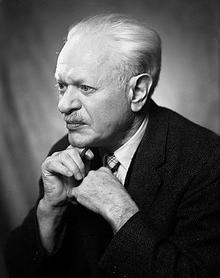
What does this mean? As of right now, the quote above is insignificant to you and your knowledge of your surroundings. However, after reading this post, you will hopefully understand the meaning behind the quote and how it is seen in today's society. It may even alter your view of reality and how you see things.
To begin, what is a "terministic screen," as seen above? The term "terministic screen" was created by American Theorist Kenneth Burke. Burke theorized about how people see the world through different views and perceptions of society. A terministic screen is how language or images shape how we form an idea about something over another idea about the same topic. This affects how we communicate with one another and how we may perceive certain actions over others.
A terministic screen focuses on one stance of a situation, thus causing a lack of information to the other side. It is meant to convince the viewer to like or dislike the side it is focusing on. A terministic screen provides a focused lens on a topic so that the viewer may not easily see the other side. This lens can be looked at as a potential form of bias because it only provides the one side of a situation. This affects how we process information that we are given. The one-sided showing of a situation through a terministic screen creates continuity or discontinuity between the reader and the situation that is being presented. Continuity is the theory that development is a gradual, continuous process whereas discontinuity is the theory that development occurs through a series of distinct stages. The terministic screens foster these motions of continuity or discontinuity through the information that they present.
So how does this relate to today's society? Terministic screens can be seen almost everywhere. They can be found in magazine articles, biased news sources, commercials, movie trailers, and of course, social media. Social media is a big example of how people can be influenced by the terministic screen that is provided on social media platforms. Social media is filled with misinformation that can spread quickly due to the tightly interlocked networks that people form with each other.
An example of the misinformation spread by a terministic screen is the viral video of a teenager wearing a "Make America Great Again" hat facing off with a respected Native American tribe leader during a protest. The video went viral and caused many angry, negative reactions. People were outraged at how the teenager was treating the tribal leader. A video of the incident is linked below. As you watch the video, see how you can find the disrespect in it, how the video emphasizes the cruelty of the teenagers wearing the "MAGA" hats. See how outraged you become after seeing the video.
https://www.youtube.com/watch?v=HAzxK1AwRX8
See how you feel? How upsetting and disturbing the video can be? However, the video above does not show the truth of the matter. After this video was fully circulated through multiple social media platforms and even posted on news websites during their broadcasts, the truth of the matter was revealed. The teenager wearing the MAGA hat was not actually provoking the Native American tribal leader. At the protest, a group of protestors were being antagonized by a third party group. When the antagonizing started to escalate, the Native American tribal leader placed himself between the two groups so that violence would not break out. A video of the actual event, from both point of views, is included below.
https://www.youtube.com/watch?v=0JMkzakXgIY
The MAGA teenager and the Native American tribal leader incident shows how a terministic screen can negatively affect our views and perceptions. After the original video went viral, people demanded to know who the MAGA teenager was so that they could deface him and make his life miserable. After the actual video was released, the teenager was forced to sue news companies that spread the original video because his name was being defaced and his life was negatively impacted. The terministic screen of social media and the news provided only one side of the story, which resulted in a form of outrage as the impact. When the actual video was posted, people were afraid to admit that they were wrong and found themselves caught in a situation of having to fix their mistakes. If the actual video had been circulated at first, people would have responded differently and the video could have been potentially not as viral.
As seen from the example above, terministic screens can be very dangerous. Exposing only one view or one side of a situation prevents the full truth of a situation from being exposed to viewers. On top of that, a terministic screen can be made to convince the viewer of only one point. A terministic screen can be persuasive while also spreading misinformation.
In order to potentially prevent the misconception of terministic screens, it is important to know all of the facts before sharing something. If people had known what the actual incident was between the MAGA hat teenager and the Native American tribal leader, then the teenager would not have had his reputation defaced. It is inevitable that we will always have to deal with terministic screens in our lives, but the amount of terministic screens that we view can be limited if we know all of the facts before spreading information.
Allow yourself to be skeptical about information before it is posted and remember to question how sharing something may affect someone's life. People on the internet are still real people. Terministic screens affect our lives, but it is up to us to make the truth travel further than the screen.
Comments
Post a Comment